5D Lottery Leading Zero: Why 00457 Is Not the Same as 457
Understand why leading zeros matter in five-digit lottery results, how 00457 differs from 457 as a formatted sequence, and how spreadsheets, screenshots and copied records can remove zeros.

In this article
- 5D Lottery Leading Zero Ka Meaning
- Why 00457 Is Different From 457
- Reading the Five Positions Correctly
- Zero Is a Valid Digit
- Leading Zero vs Missing Digit
- Why Excel and Spreadsheets Remove Leading Zeros
- 5D Lottery CSV Import Problems
- Comparing Correct and Incorrect Formats
- How Leading Zeros Affect Result History
- Leading Zeros and Position-Based Categories
- Is 00000 a Valid Five-Digit Sequence?
- Leading Zero and Number Prediction Claims
- Why Screenshots Can Show Different Results
- Keeping Five-Digit Results Consistent
- Frequently Asked Questions
- Why does 00457 become 457?
- Is 00457 the same as 457?
- What does the first zero mean in a 5D result?
- Can a 5D result start with two zeros?
- Why does Excel remove zeros from lottery results?
- Is 00000 a five-position sequence?
- Does a leading zero change the digit sum?
- Can leading zeros predict future results?
- Does this guide verify actual Jai Club results?
- Conclusion
A five-digit lottery result may begin with one or more zeros. For example, a result displayed as 00457 contains five positions, even though ordinary calculators and spreadsheets may treat the same characters as the number 457. This difference can create confusion when users copy results, compare screenshots or review historical records.
Quick answer: In a five-position result format, 00457 and 457 are not the same representation. The first contains five position values, while the second contains only three visible digits. They have the same mathematical value when interpreted as ordinary integers, but they do not preserve the same fixed-width information.
This guide explains how leading zeros work, why they matter for five-position records and how formatting errors can affect result histories. The examples are fictional and describe general number-format principles, not an authenticated Jai Club result.
5D Lottery Leading Zero Ka Meaning
A leading zero is a zero placed before the first non-zero digit in a numerical string.
In the sequence 00457, the first two characters are zeros. They are called leading zeros because they appear at the beginning.
When the sequence is used as a five-position result, each zero occupies a defined position. The first zero belongs to position A and the second to position B.
Removing these zeros changes the visible structure of the result.
This is different from ordinary arithmetic, where the integers 00457 and 457 represent the same quantity.
Why 00457 Is Different From 457
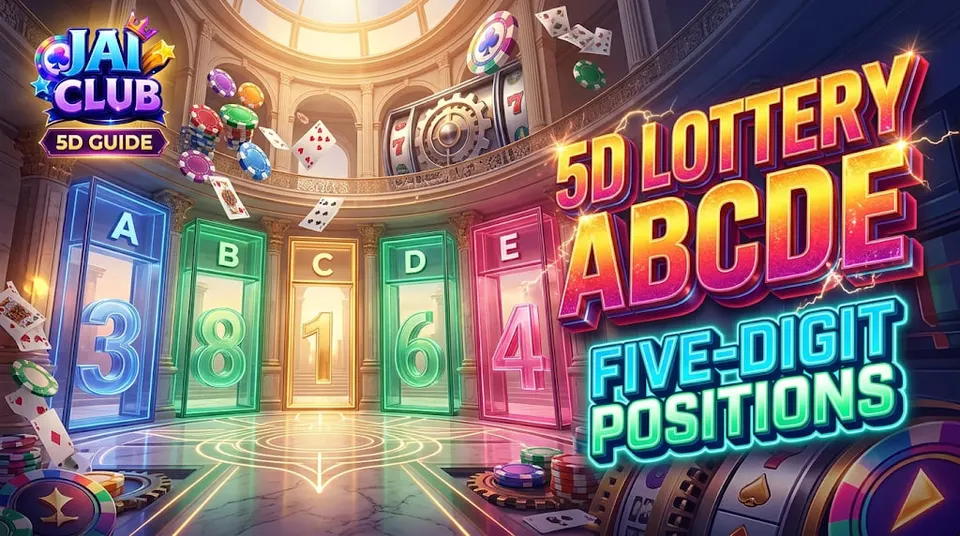
Consider a fixed five-position format labelled A, B, C, D and E.
The sequence 00457 contains a value for every position. Its representation is complete because it has five characters.
The string 457 contains only three characters. Without additional rules, it does not identify which five-position sequence was originally intended.
A system might pad it with two zeros and interpret it as 00457. But that depends on knowing the expected width and the rule for restoring missing characters.
Therefore, a copied record containing only 457 may be incomplete even though the ordinary integer value is unchanged.
Reading the Five Positions Correctly
For the fictional result 00457, the correct position-based interpretation is:
| Position | Digit |
|---|---|
| A | 0 |
| B | 0 |
| C | 4 |
| D | 5 |
| E | 7 |
All five positions are meaningful in a fixed-width result format.
Position A is not empty. It contains the digit zero.
Similarly, position B is not missing. It also contains zero.
This distinction matters when comparing records or discussing a specific position within the sequence.
Zero Is a Valid Digit
Zero is one of the ten decimal digits, alongside 1 through 9.
If a five-position format allows any digit from 0 to 9 in each position, zero may appear at the beginning, middle or end.
For example, 00012, 40506 and 75000 are all five-character digit sequences.
The presence of zero does not make a sequence invalid under that general mathematical model.
However, whether a specific game allows and uses all such results must be confirmed through its actual rules.
A visually unusual number should not automatically be treated as an error.
Leading Zero vs Missing Digit
A leading zero is a known value. A missing digit is information that has not been recorded or displayed.
This difference is important.
If a result is 00457, both starting positions are explicitly known to contain zero.
If a copied record shows only 457, the omitted positions may have been removed by software formatting, but the record alone does not prove what was lost unless the original format is known.
A missing character should not automatically be replaced with zero without a justified formatting rule.
Why Excel and Spreadsheets Remove Leading Zeros
Spreadsheet applications often interpret a sequence of digits as a number.
When a user enters 00457 into a cell formatted as an ordinary number, the software may display 457 because leading zeros do not change the integer's value.
This behaviour is useful for arithmetic but problematic for identifiers, postal codes and fixed-width game result strings.
For a five-position record, the formatting should preserve all five characters.
One common approach is to store such values as text. Another is to use an appropriate five-digit display format where the underlying data and its intended use allow it.
The essential requirement is that the original position information remains recoverable.
5D Lottery CSV Import Problems
CSV files often contain plain-text fields separated by commas. When a spreadsheet opens such a file, it may automatically guess the data type of each column.
A column containing results like 00034 or 01280 can be interpreted as numeric data, causing leading zeros to disappear.
This may happen even when the original CSV contained the correct five-character strings.
A reader comparing the spreadsheet with a screenshot could then mistakenly conclude that the results disagree.
The difference may be caused by the import process rather than the original data.
When working with fixed-width result strings, the column should be imported and stored in a format that preserves its characters.
Comparing Correct and Incorrect Formats
| Original five-position result | Possible numeric display | What was lost |
|---|---|---|
| 00457 | 457 | Two leading zeros |
| 00018 | 18 | Three leading zeros |
| 01234 | 1234 | One leading zero |
| 10020 | 10020 | Nothing |
| 00000 | 0 | Four leading zeros |
These are formatting examples only.
They illustrate why the number of visible characters matters when the intended record contains five ordered positions.
How Leading Zeros Affect Result History
A result history may show several pieces of information, such as a period identifier and the corresponding five-digit sequence.
If one interface preserves leading zeros and another removes them, the records may appear inconsistent.
For example, a mobile page could show 00457 while a downloaded spreadsheet displays 457.
That difference should first be investigated as a possible formatting issue.
Before concluding that the underlying result changed, compare the same round, the original data and the rules used to display the sequence.
A screenshot by itself may not reveal how the information was stored.
Leading Zeros and Position-Based Categories
Position-based systems identify individual values by their location.
If A is the first position and B is the second, removing leading zeros can shift the apparent position of every remaining digit.
In 00457, the digit 4 is in position C. If the zeros are removed and the display becomes 457, the digit 4 appears visually first.
A person reading the shortened display without understanding the formatting may incorrectly treat 4 as position A.
This illustrates why preserving the complete result string matters for accurate interpretation.
The exact meaning of game-specific position categories remains dependent on the relevant rules.
Is 00000 a Valid Five-Digit Sequence?
Mathematically, 00000 is a valid five-character sequence when each of the five positions can contain zero.
Its ordinary integer value is zero, but its five-position representation contains five explicit zeros.
The sequence can be distinguished from a missing or empty result record because it contains five known values.
Whether 00000 is an allowed outcome in a particular digital game depends on the actual result-generation and validation rules.
This article does not independently verify the complete set of outcomes supported by Jai Club's current 5D implementation.
Leading Zero and Number Prediction Claims
Some charts treat leading-zero results as unusual events and attempt to use them as signals for future outcomes.
However, a zero at the beginning of a result is not automatically a prediction indicator.
A formatted string may look unusual to a reader who expects ordinary five-digit integers, but the visual appearance of the sequence does not establish its future probability.
Likewise, a history chart containing several leading zeros does not prove that a result without them must appear next.
Prediction claims require evidence beyond formatting patterns.
Why Screenshots Can Show Different Results
Screenshots can differ because of display formatting, page layout or incomplete cropping.
One image may show the full five-digit string, while another may focus on a column where the value has been interpreted as an integer.
If the period identifier is missing, two screenshots may also refer to different rounds.
These possibilities should be investigated before assuming that the service modified a completed result.
The appropriate comparison uses the original period, complete five-position representation and reliable recorded information.
Keeping Five-Digit Results Consistent
A reliable record should preserve the original digit order and the expected number of positions.
For five-position strings, values should remain five characters long even when the first character is zero.
When data is copied to another application, verify that zeros have not disappeared.
If a screenshot and spreadsheet differ, inspect the export or import formatting before making conclusions about the underlying game.
These practices help prevent clerical errors, but they do not establish whether any particular game's results are fair or predictable.
For a broader explanation of the ABCDE structure, read the 5D Lottery Position Guide.
Frequently Asked Questions
Why does 00457 become 457?
Software treating it as an ordinary integer may remove leading zeros.
Is 00457 the same as 457?
They have the same integer value, but they are different fixed-width representations.
What does the first zero mean in a 5D result?
In a five-position string, it means the first position contains zero.
Can a 5D result start with two zeros?
A general five-position digit format can support that structure if its rules permit zero in each position.
Why does Excel remove zeros from lottery results?
Spreadsheet software may automatically classify the values as numbers rather than text.
Is 00000 a five-position sequence?
Yes, mathematically it contains five explicit digit positions.
Does a leading zero change the digit sum?
Adding zero does not change the total, but the zero still matters for preserving the position-based sequence.
Can leading zeros predict future results?
No predictive advantage is established by the presence of leading zeros alone.
Does this guide verify actual Jai Club results?
No. It explains the mathematics and formatting of five-position result strings.
Conclusion
Leading zeros are essential to the correct presentation of a five-position number sequence. The string 00457 contains five positions, while the ordinary numeric display 457 omits the two starting zeros.
This difference matters when reading individual digit positions, comparing screenshots and importing histories into spreadsheets.
Preserving the full five-character representation prevents mistakes without implying that the sequence can predict a future outcome.
For related game terminology, visit the Jai Club Games Guide.
Editorial note: All examples are fictional. Actual game rules and results require separate verification.