5D Lottery Incorrect Digit Order: Common Display and Copying Errors
Learn why five-digit lottery results may appear in the wrong order when copied, displayed or exported, and how ABCDE positions and leading zeros help preserve accurate records.
In this article
- Why Digit Order Matters in 5D Lottery
- EXAMPLE: A Swapped-Digit Error
- Copying From a Small Mobile Screen
- The Problem With Leading Zeros
- Why Spreadsheet Sorting Can Damage Results
- Right-to-Left Display Confusion
- EXAMPLE: Two Result Rows Mixed Together
- Repeated Numbers Make Errors Harder to Notice
- A Wrong Display Is Not Automatically a Wrong Result
- How to Preserve Exact Result Data
- Can Digit-Order Errors Affect Historical Analysis?
- Frequently Asked Questions
- Is 30471 the same result as 34071?
- Why do both sequences have the same sum?
- Can leading zeros disappear in spreadsheets?
- Does a missing zero always mean the result changed?
- Can sorting a spreadsheet create incorrect results?
- Does a screenshot prove that the game changed its outcome?
- Should the period ID be preserved?
- Can a digit sum identify a copying error?
- Accuracy Starts With the Original Five Digits
A five-digit lottery result can look different after it has been copied into a message, spreadsheet or another website. Sometimes the order changes. In other cases, one or more leading zeros disappear.
These mistakes may seem minor, but a five-position result depends on the exact value displayed in every position.
For example, 30471 and 34071 contain the same digits but are different ordered sequences.
Quick answer: An incorrect digit order occurs when the five original positions are changed during display, copying or storage. The correct record should preserve every digit from left to right, including repeated numbers and leading zeros, together with the relevant game period.
This guide explains common formatting errors and how readers can distinguish a copying mistake from a genuine discrepancy in a completed result.
Why Digit Order Matters in 5D Lottery
A five-position result can be represented using labels A, B, C, D and E.
Position A is the first digit on the left, and position E is the final digit on the right.
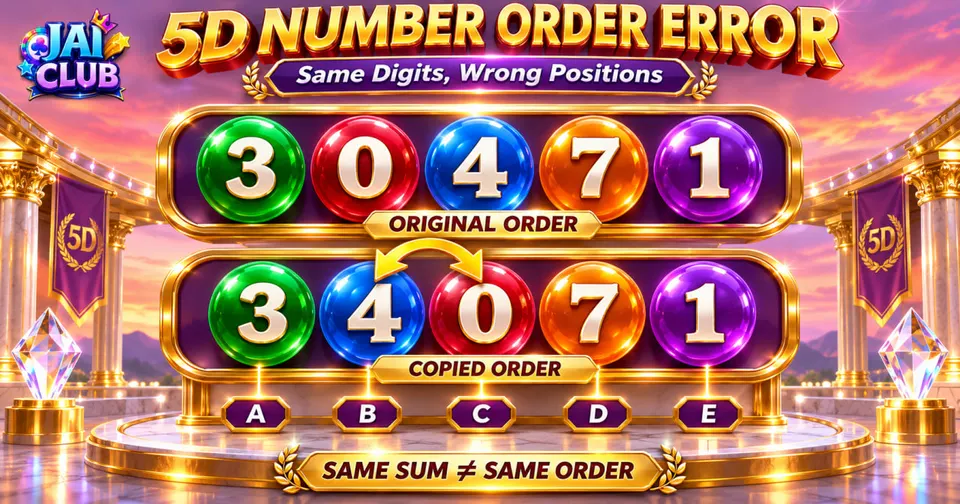
Consider the fictional result 30471.
A contains 3, B contains 0, C contains 4, D contains 7 and E contains 1.
If the second and third digits are exchanged, the result becomes 34071.
The new sequence has the same collection of digits but different position values.
This means the two records cannot be treated as identical.
EXAMPLE: A Swapped-Digit Error
Imagine the original completed record displays 30471.
Someone copies it into a spreadsheet as 34071.
| Position | Original | Copied |
|---|---|---|
| A | 3 | 3 |
| B | 0 | 4 |
| C | 4 | 0 |
| D | 7 | 7 |
| E | 1 | 1 |
The mistake affects positions B and C.
Both sequences have the same digit sum:
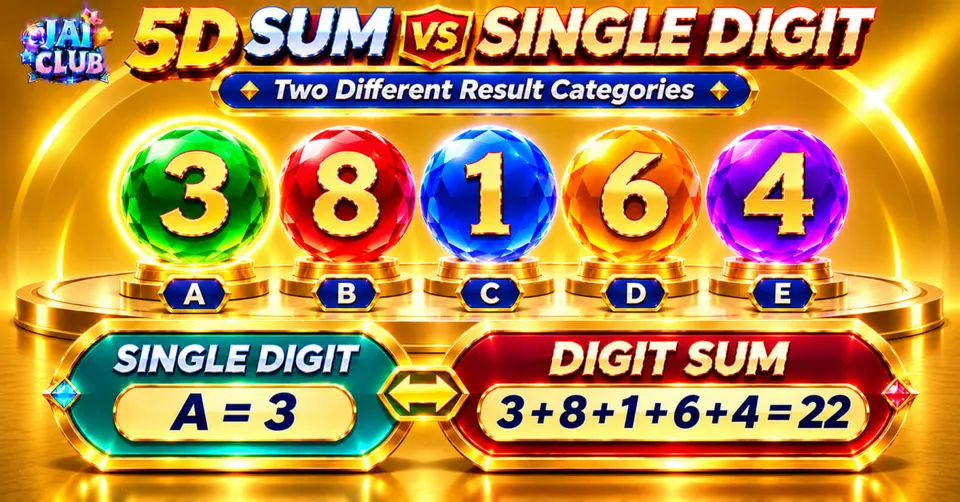
3 + 0 + 4 + 7 + 1 = 15.
The copied sequence also sums to 15.
Therefore, a matching sum cannot prove that the copied result is accurate.
The position order must be checked independently.
Copying From a Small Mobile Screen
A mobile interface may display five numbers close together.
When the screen is narrow, numbers can appear inside compact tiles or separate result columns.
A person copying the information manually may accidentally reverse two adjacent digits.
Some screenshots are also cropped, making it difficult to identify where the sequence begins.
The resulting record may look plausible because it still contains five valid digits.
A careful comparison should use the complete original sequence and its period identifier.
A digit should not be inferred merely from the colours or arrangement of nearby controls.
The Problem With Leading Zeros
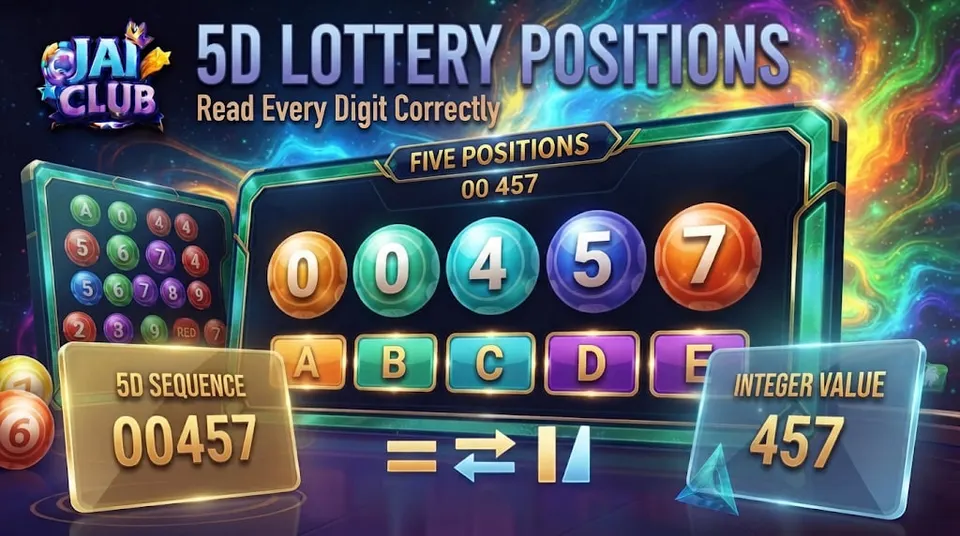
Consider the fictional sequence 00457.
It contains exactly five positions.
A = 0, B = 0, C = 4, D = 5 and E = 7.
A spreadsheet that interprets the sequence as an ordinary integer may display 457.
The numerical value has not changed, but the five-position representation has been lost.
This can affect any analysis that uses A and B separately.
For fixed-width results, leading zeros are not decorative. They are part of the displayed sequence.
Why Spreadsheet Sorting Can Damage Results
A spreadsheet may contain a separate column for each digit.
If one position column is sorted independently, the original results can become misaligned.
For example, the C values may move to different rows while the round IDs remain unchanged.
This can create entirely new sequences that never appeared in the original history.
A similar problem occurs when the complete digit string is automatically converted into a numerical value.
To preserve accuracy, the full five-character sequence and its associated period should remain connected during sorting and filtering.
Right-to-Left Display Confusion
Some websites or messaging applications display content using different text-direction settings.
In a right-to-left layout, mixed text and numbers can sometimes become visually confusing.
However, the presence of another language does not automatically mean the sequence is reversed.
Readers should inspect the actual character order rather than assume it.
The same principle applies to screenshots copied into edited graphics.
A design tool may reposition number elements independently of the original source.
EXAMPLE: Two Result Rows Mixed Together
Suppose a fictional history contains:
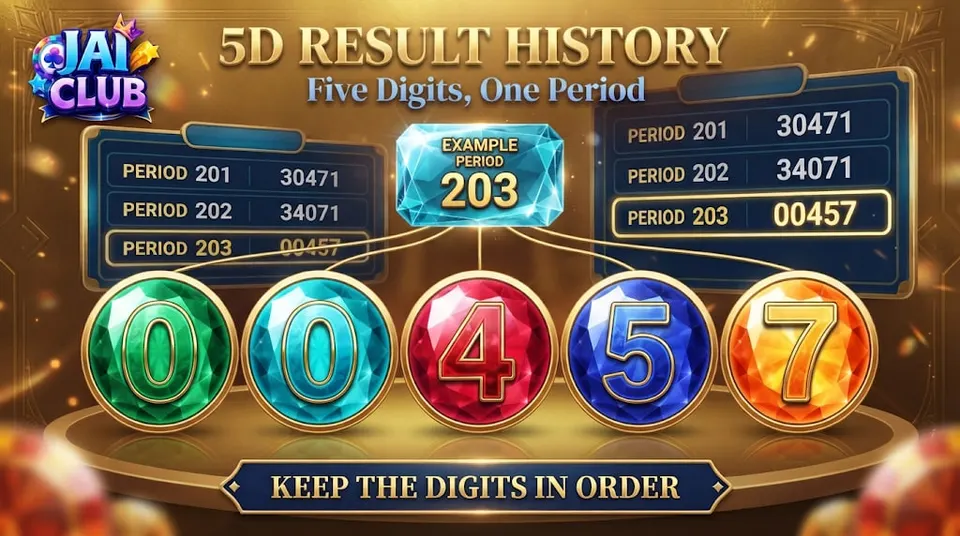
EXAMPLE-201 — 30471
EXAMPLE-202 — 56120
A copying mistake could associate 30471 with EXAMPLE-202.
The five-digit sequence itself would remain intact, but the historical record would still be inaccurate.
This is a period-matching error rather than a digit-order error.
Both problems matter because an authentic result must be linked with the correct completed round.
For more detail, read the 5D Result History Guide.
Repeated Numbers Make Errors Harder to Notice
A sequence such as 11223 contains repeated digits.
If it is copied as 12123, the same five values remain present.
The sum is unchanged at 9.
However, the positions are different.
Repeated-digit patterns can therefore hide order mistakes when readers compare only the number of occurrences.
The original positions should be retained even when the collection of values appears identical.
A Wrong Display Is Not Automatically a Wrong Result
A screenshot showing a different sequence from another screenshot does not immediately prove that the underlying game outcome changed.
The images may come from different periods.
One may contain a copying error.
An interface could also show outdated or incomplete information.
If authenticated completed records for the same period genuinely disagree, the situation requires more careful investigation.
The cause should be established from evidence rather than assumed.
How to Preserve Exact Result Data
For historical records, a five-digit sequence is often best stored as text.
This helps retain leading zeros and the original order.
The period identifier should also be preserved without changing its characters.
Derived values, such as the digit sum, can be stored in separate columns.
This separation prevents a calculated total from replacing the original source result.
A complete record should allow a reader to compare each A–E position with the original display.
Can Digit-Order Errors Affect Historical Analysis?
Yes.
A frequency chart based on individual positions can be distorted when copied digits are swapped.
For example, moving a zero from position B to C changes the observed frequency in both columns.
A chart of complete five-digit sequences can also become inaccurate.
Interestingly, a sum chart might not reveal the problem because rearranging digits does not change their sum.
This demonstrates why a correct mathematical summary cannot compensate for incorrect source data.
Frequently Asked Questions
Is 30471 the same result as 34071?
No. The digits occupy different positions.
Why do both sequences have the same sum?
Addition does not depend on the order of the values.
Can leading zeros disappear in spreadsheets?
Yes. Automatic number formatting may remove them.
Does a missing zero always mean the result changed?
No. It may be a formatting error that changes the displayed five-position representation.
Can sorting a spreadsheet create incorrect results?
Yes, particularly when result columns are sorted independently.
Does a screenshot prove that the game changed its outcome?
Not by itself. The period, source and completeness of the image must be considered.
Should the period ID be preserved?
Yes. It identifies the round associated with the full result.
Can a digit sum identify a copying error?
Not reliably. Two sequences with the same digits in a different order have the same sum.
Accuracy Starts With the Original Five Digits
A good 5D history should preserve the sequence exactly as it was recorded.
Swapping two digits, deleting leading zeros or mixing rows can make later analysis unreliable, even when the calculated totals appear correct.
The useful habit is to keep the complete five-position result and its period together, and treat sums or other classifications as separate derived information.
For additional position terminology, see 5D Lottery ABCDE Positions.
Editorial note: All five-digit sequences and periods are fictional illustrations. This article does not confirm an actual Jai Club result-display defect.