5D Lottery Result History: Matching Five Digits to One Period
Learn how to read five-digit lottery result history correctly by matching each ordered sequence to its completed period, preserving leading zeros and avoiding common screenshot and spreadsheet mistakes.
In this article
- What Is 5D Lottery Result History?
- Why the Period Identifier Matters
- EXAMPLE: Five Completed Periods
- Reading ABCDE Positions Correctly
- Leading Zeros in Result History
- Why a Spreadsheet Can Change the Result
- Period IDs Should Also Be Stored as Text
- Why Row Alignment Is Important
- Same Digits, Different Periods
- Detecting Duplicate History Entries
- Screenshots and Missing Context
- Timestamps and Time Zones
- Why the Digit Sum Is Not a Substitute
- Is the Latest Result Always the Top Row?
- Can Historical Results Predict Future Numbers?
- A Practical History-Checking Method
- Frequently Asked Questions
- What is a 5D Lottery period number?
- Does the period number contain the result?
- Why should 00457 remain five digits?
- Can two periods have the same five-digit result?
- Is 30471 the same result as 34071?
- Can spreadsheets remove leading zeros?
- Does a result sum identify the complete five-digit sequence?
- Can result history guarantee the next outcome?
- Before Using a 5D History Chart
A five-digit result is only meaningful when readers know which completed period it belongs to.
In a 5D Lottery history, numbers may appear in rows beside dates, times or period identifiers. At first glance, this looks straightforward. However, copying the wrong sequence from a nearby row or removing a leading zero can produce an inaccurate record.
These problems become especially important when readers compare screenshots, maintain spreadsheets or analyse historical positions.
Quick answer: A reliable 5D result-history entry should preserve the full five-character sequence and its associated period identifier. A digit sequence copied without its period may be difficult to verify, while a period number alone does not reveal the completed result.
This guide explains how the two pieces of information work together and how common recording errors can change the meaning of historical data.
What Is 5D Lottery Result History?
Result history is a collection of completed game outcomes organised by period or another event identifier.
In a five-position number format, one completed result may contain five digits, usually interpreted from left to right.
For example, the fictional sequence 30471 contains five separate positions.
A history entry might associate that sequence with an example period labelled EXAMPLE-201.
The period identifies the event. The five digits describe its recorded outcome.
These values serve different purposes and should remain connected.
This article does not claim access to a live Jai Club 5D results database.
Why the Period Identifier Matters
A period identifier distinguishes one completed round from another.
Two consecutive periods may have completely different five-digit results.
Even when two results share several digits, they should not be treated as the same event.
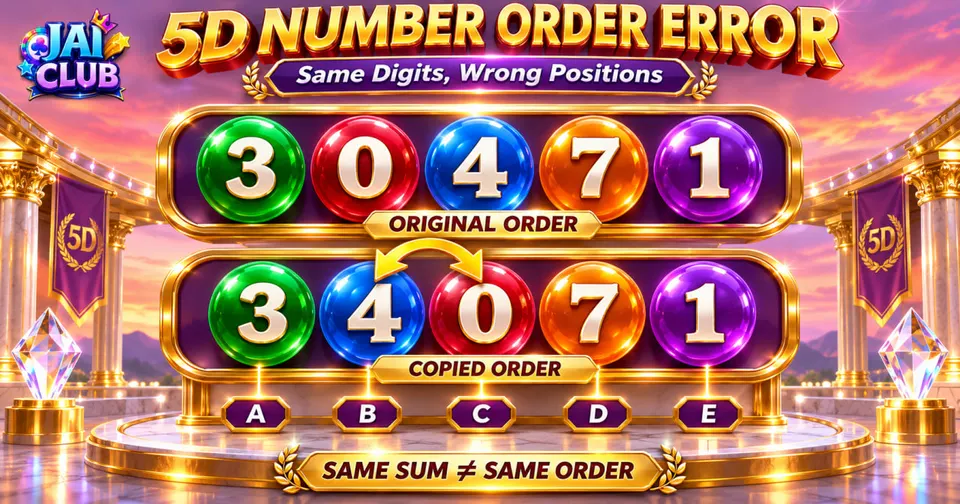
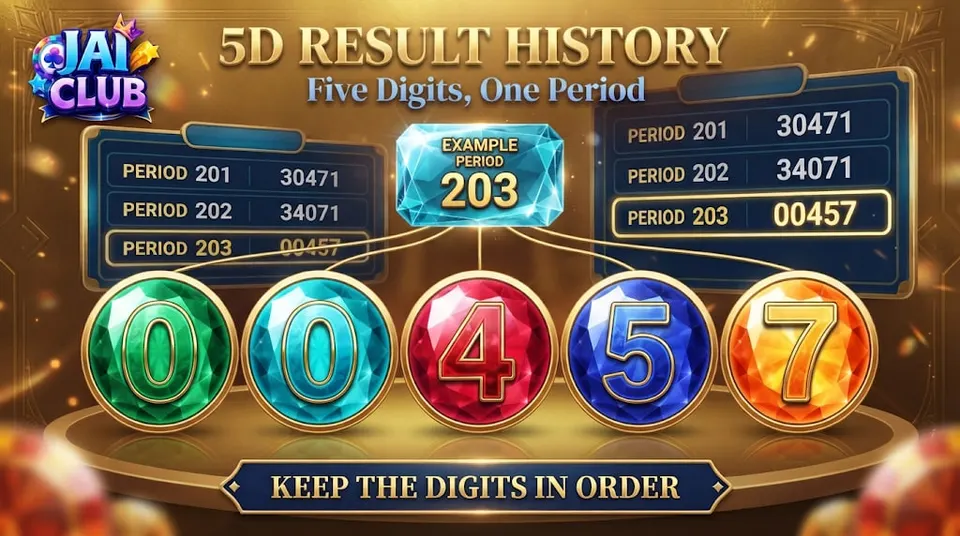
For example, EXAMPLE-201 may display 30471, while EXAMPLE-202 displays 34071.
The sequences contain the same collection of digits but occupy different positions.
Without the period labels, readers could confuse the two records.
Accurate historical analysis depends on preserving the correct association.
EXAMPLE: Five Completed Periods
The following table is fictional and illustrates how a five-digit history could be organised.
| Period | Recorded sequence | A | B | C | D | E |
|---|---|---|---|---|---|---|
| EXAMPLE-201 | 30471 | 3 | 0 | 4 | 7 | 1 |
| EXAMPLE-202 | 34071 | 3 | 4 | 0 | 7 | 1 |
| EXAMPLE-203 | 00457 | 0 | 0 | 4 | 5 | 7 |
| EXAMPLE-204 | 57130 | 5 | 7 | 1 | 3 | 0 |
| EXAMPLE-205 | 11223 | 1 | 1 | 2 | 2 | 3 |
Each row represents one illustrative completed period.
The table demonstrates that the order of digits matters and that leading zeros must be preserved.
The values are not actual historical game results.
Reading ABCDE Positions Correctly
The labels A, B, C, D and E can identify the five digits in their displayed order.
A is the first position, while E is the fifth.
For the sequence 30471, A is 3 and E is 1.
For 34071, A is still 3, but B and C have changed positions.
Although the two sequences contain the same collection of digits, they are different ordered results.
This distinction is important whenever readers compare individual positions over time.
For background, see the 5D Lottery ABCDE Guide.
Leading Zeros in Result History
Leading zeros are easy to lose when numbers are copied into spreadsheets.
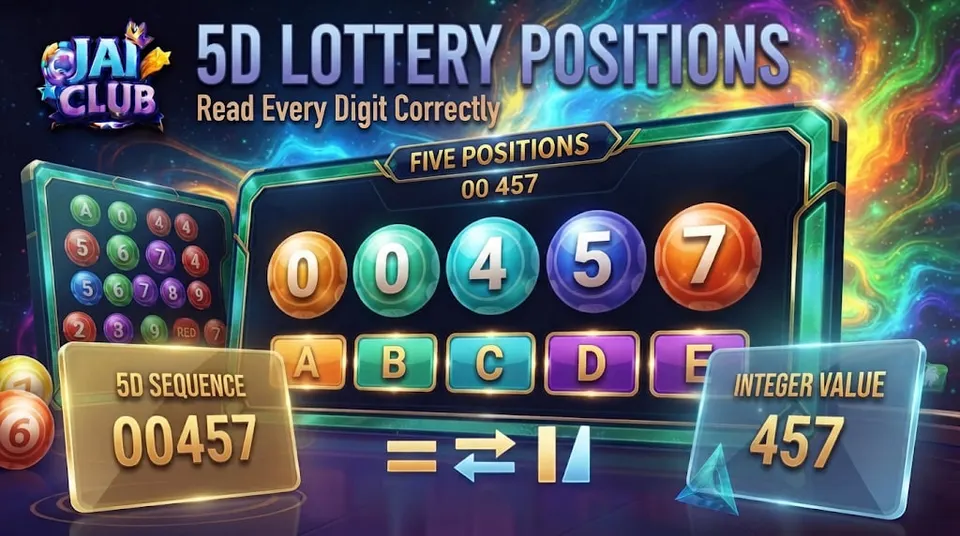
Consider the fictional sequence 00457.
As an ordinary integer, it has the numerical value 457.
However, as a fixed five-character result, it contains zero in positions A and B.
Removing those zeros destroys the original displayed structure.
Therefore, a history record intended to preserve five positions should store the sequence exactly as five characters.
The number 457 does not communicate the original leading positions unless the intended format is already known.
Why a Spreadsheet Can Change the Result
Many spreadsheet applications automatically interpret a value such as 00457 as a number.
That conversion may remove the zeros at the beginning.
A reader importing several rows could therefore end up with inconsistent lengths.
Some results might contain five characters, while others appear with only three or four.
This can create errors when the data is later separated into ABCDE columns.
The correct approach is to treat the sequence as fixed-width text or apply a reliable formatting method that preserves the five positions.
A history table should be checked after import rather than assumed to be correct.
Period IDs Should Also Be Stored as Text
A period number may be longer than the actual five-digit result.
In some systems, period identifiers can contain leading zeros or other formatting details.
They may also be too large for software that stores only limited numerical precision.
For that reason, identifiers are often better treated as text rather than values intended for arithmetic.
The goal is to preserve the exact ID.
A period is an identifier, not a quantity that must be added or multiplied.
Changing its formatting can break the connection with the original record.
Why Row Alignment Is Important
A result-history table is only useful when each sequence remains associated with the correct period.
Imagine a spreadsheet where the period column is sorted independently from the result column.
The rows could become misaligned.
EXAMPLE-201 might then appear beside the result from EXAMPLE-204.
The data would look complete, but its meaning would be wrong.
When sorting a historical table, the full rows must remain together.
The period and result should never be rearranged independently.
Same Digits, Different Periods
Two different rounds can contain similar or identical numbers.
For example, EXAMPLE-301 might display 12345 and EXAMPLE-302 might also display 12345.
If this occurred in an authenticated history, the repeated result would belong to two separate periods.
The matching digits would not mean that the same event was recorded twice.
Conversely, duplicate rows containing the same period and result could represent repeated copies of one event.
The identifier helps distinguish repeated outcomes from duplicated records.
Detecting Duplicate History Entries
A duplicate entry occurs when the same recorded event is included more than once.
This can happen during manual copying, repeated exports or screenshot collection.
For example, a user could accidentally record EXAMPLE-305 twice.
If both entries are counted, a frequency chart may give too much weight to that one round.
A useful historical dataset should identify duplicate period IDs.
However, duplicate identifiers with conflicting sequences should not be silently discarded.
Such conflicts require investigation because the underlying records may be inconsistent.
Screenshots and Missing Context
A screenshot may show a list of five-digit results without displaying the corresponding period numbers.
Another image may show a period but cut off some of its digits.
Both images are incomplete for reliable comparison.
A screenshot can also capture the interface while it is transitioning between rounds.
Before combining data from different images, readers should identify the completed period and the full five-position sequence.
If either element is missing, the record should be treated as incomplete rather than guessed.
Timestamps and Time Zones
Some result histories include timestamps.
The timestamp may indicate when a round began, ended or was published.
These are not necessarily the same event.
Time-zone formatting may also differ between systems.
For Indian readers, Indian Standard Time is UTC+05:30.
A timestamp shown in UTC and another displayed in IST may represent the same moment despite different clock values.
The timestamp's meaning and time zone should therefore be identified before comparing records.
Why the Digit Sum Is Not a Substitute
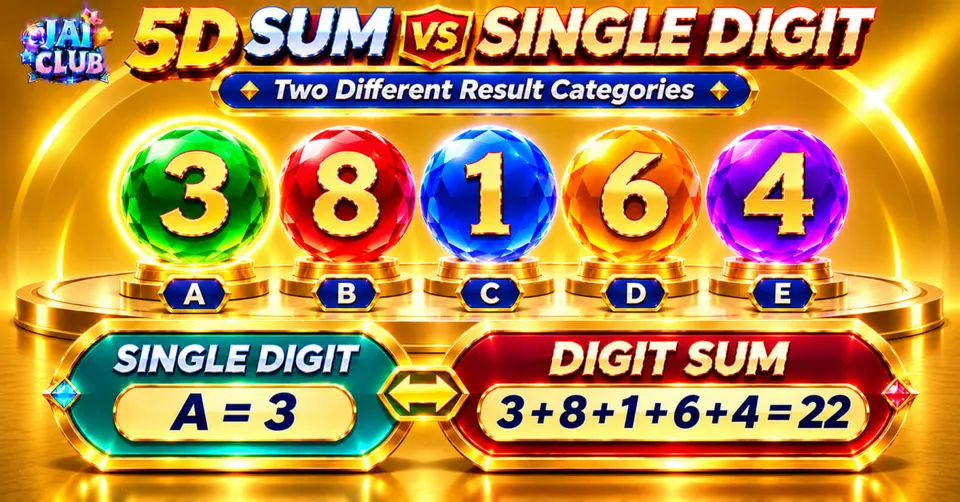
A digit sum is calculated by adding the five values.
For example, 30471 gives:
3 + 0 + 4 + 7 + 1 = 15
The sequence 34071 also has a sum of 15.
However, their positions differ.
If a history stores only the digit sum, it cannot reconstruct the exact result.
The sum may be useful for a mathematical summary, but it should not replace the original sequence.
For more about repeated and reordered numbers, read 5D Lottery Repeated Digits.
Is the Latest Result Always the Top Row?
Many digital interfaces display newest results first, but this is not a universal rule.
A history may show newest entries at the top, oldest first or results arranged through a filter.
A reader should identify the actual sorting order rather than assume it.
Some interfaces also separate ongoing and completed periods.
A current period that has not yet received a final result should not be treated as a completed historical entry.
The field labels and relevant status matter.
Can Historical Results Predict Future Numbers?
A complete history can describe what happened in previous periods.
It may support calculations such as digit frequency or the number of repeated sequences.
However, those calculations do not automatically determine the outcome of the next round.
If future results are generated independently under a stable random system, past frequencies do not force a particular digit to appear.
A long history may make descriptive statistics more stable, but it does not provide guaranteed forecasts.
The purpose of accurate records is reliable interpretation, not unsupported prediction.
A Practical History-Checking Method
When examining a five-digit record, begin with the period identifier.
Next, identify the complete result sequence and confirm that it contains five positions.
Then preserve the original order, including any leading zeros.
If comparing another source, match the same completed period rather than relying on the visual position of a row.
Finally, distinguish full result digits from derived information such as sums, frequency counts or additional labels.
This method makes errors easier to identify without assuming that a screenshot is automatically authoritative.
Frequently Asked Questions
What is a 5D Lottery period number?
It is an identifier associated with a particular game round.
Does the period number contain the result?
Not necessarily. The period ID and five-digit outcome are separate fields.
Why should 00457 remain five digits?
Because removing the leading zeros loses the original fixed-position representation.
Can two periods have the same five-digit result?
Mathematically, yes. Matching outcomes can belong to separate periods.
Is 30471 the same result as 34071?
No. They contain the same digits but in a different order.
Can spreadsheets remove leading zeros?
Yes. Automatic numeric formatting may change fixed-width sequences.
Does a result sum identify the complete five-digit sequence?
No. Many different sequences can have the same sum.
Can result history guarantee the next outcome?
No. Historical records do not establish certain future results.
Before Using a 5D History Chart
The quality of a historical chart depends on the accuracy of its source records.
A visually impressive chart built from misaligned rows, missing zeros or duplicated periods can produce misleading conclusions.
Keeping the period ID and exact five-digit result together is the foundation of meaningful analysis.
For additional information about number positions, continue with 5D Lottery ABCDE Positions.
Editorial scope: All example periods and results in this article are fictional. No actual Jai Club result-history database was accessed or independently audited.